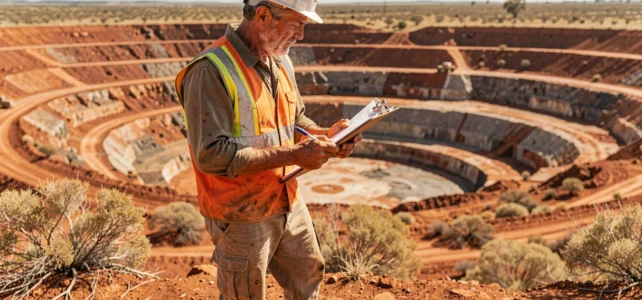
The FIFO (fly-in fly-out) roster structures every aspect of life on an Australian mining site. Understanding what this rhythm entails on a daily basis, beyond salary grids and application tutorials, helps avoid early dropouts and costly preparation mistakes in terms of time and visas.
Psychosocial Risks in Mining: WHS Regulations Changing the Landscape
Legal obligations regarding psychosocial hazards have transformed the internal operations of mining sites since their implementation in most Australian states between 2022 and 2023. Companies must now document how they identify, assess, control, and monitor risks related to isolation, long shifts, harassment, and sexual violence.
In practical terms, this means that every worker, including a Working Holiday Visa holder who has been on site for a few weeks, is subject to regular questionnaires, mandatory training, and internal surveys. This regulatory framework is not cosmetic: operators face fines of up to several million Australian dollars and criminal prosecution for non-compliance.
For those considering working in a mine in Australia, this regulatory pressure has a direct effect on daily life. Shift start briefings systematically include a wellness component. Peer support programs are deployed on site, with trained volunteers among the teams. Operators like Mineral Resources or Regis Resources have structured partnerships with specialized helplines, accessible from the camps.
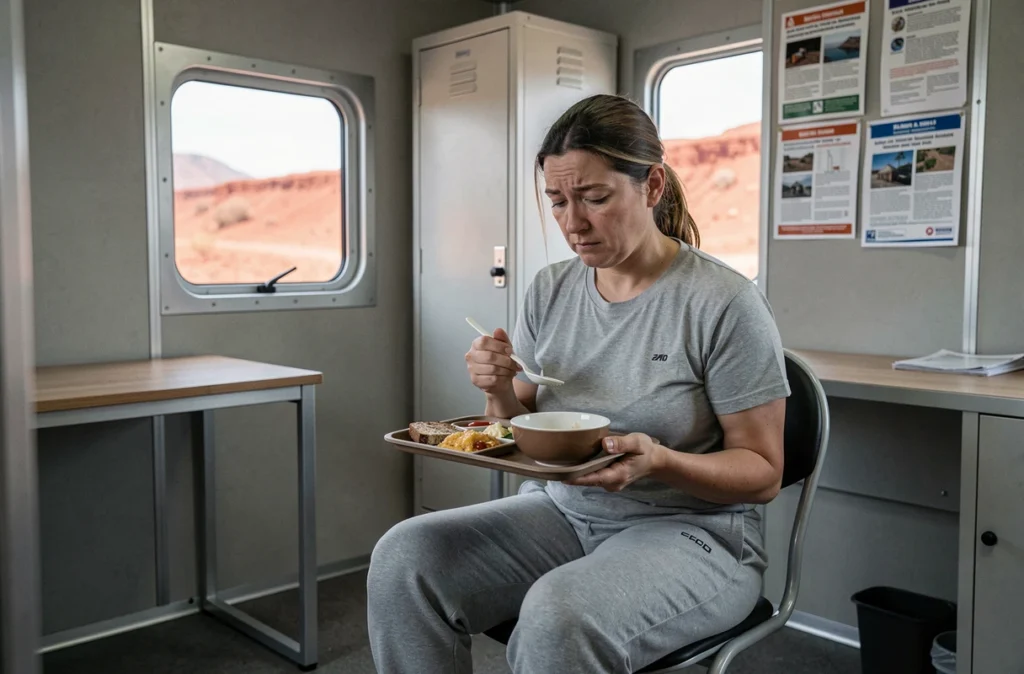
We observe that this procedural layer surprises newcomers accustomed to less regulated work environments. The volume of paperwork and training exceeds what a backpacker anticipates, and one must prepare mentally as well as physically.
FIFO Rotation and Cumulative Fatigue: What Two Weeks on Site Does to the Body
The classic pattern remains 2/1 (two weeks on site, one week off) or 8/6 (eight days on, six days off) depending on the position and the company. Twelve-hour shifts, often night shifts the first week and day shifts the following week, do not allow the circadian rhythm to stabilize.
Recent industry surveys report concerning levels of burnout and chronic physical pain among field workers across all trades. The day/night alternation combined with geographical isolation creates a time compression effect: days start to blend together, and social markers fade.
Camp Life: Between Standardized Comfort and Monotony
Modern mining camps offer air-conditioned single rooms (dongas), a canteen open for long hours, a gym, and sometimes a pool. The material comfort is real.
The downside, rarely described, lies in the structural monotony of the camp. Movements are limited to the donga-canteen-site route. Alcohol is prohibited or strictly limited. The phone network is often weak outside the camp’s Wi-Fi areas. After a twelve-hour shift in the heat of the Pilbara or the dust of NSW, options reduce to eating, calling loved ones if the network allows, and sleeping.
- The time difference with France (six to eight hours depending on the season) complicates family calls, especially during night rotations when the availability window falls in the middle of the Australian day, when the worker is sleeping.
- The R U OK? programs and peer support initiatives are present on most major sites, but their effectiveness largely depends on the local team culture and the direct supervisor.
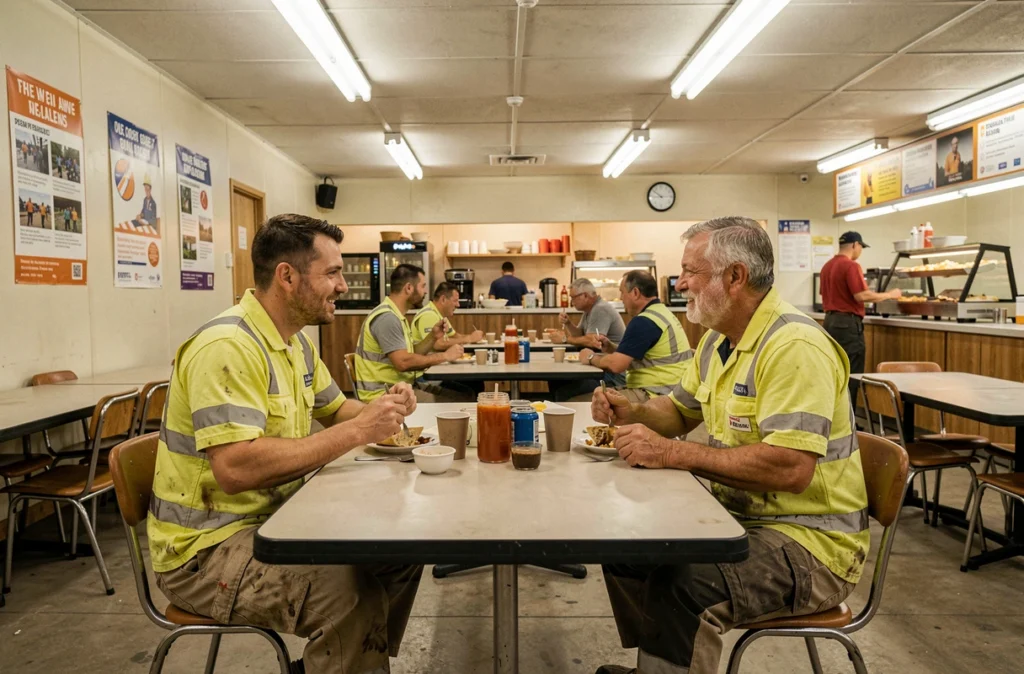
- Canteen food, abundant and free, tends towards a high-protein, carbohydrate-rich diet. Maintaining a balanced diet requires discipline, especially on long rotations.
Visa and Labor Shortage: An Unstable Context for Temporary Workers
The mining sector’s reliance on temporary visas is a risk factor for project scheduling. Mining employer organizations regularly warn that any tightening of migration flows jeopardizes the availability of positions on site. In 2025-2026, the issue became politically sensitive, with debates on pausing or restricting certain working holiday visas.
For a Working Holiday Visa holder, this instability translates into uncertainty that is not just administrative. Mining recruitment agencies (labour hire) quickly adjust their staffing based on contracts and government decisions. A confirmed position can be postponed by several weeks if a project loses qualified personnel due to a change in migration policy.
What This Means for Validating the 88 Days
Waiting periods between placements do not count towards validating the second visa. A worker who accumulates unpaid stand-down weeks between rotations sees their 88-day calendar stretch well beyond three effective months. Planning a financial buffer to cover these scheduling gaps is a precaution we consistently recommend.
Physical Safety on Mining Sites: Beyond the White Card
The White Card (General Construction Induction Card) is a basic prerequisite, but it only covers a fraction of the safety protocols actually applied on a mining site. Each site imposes its own induction, which usually lasts a full day and covers specific risks: heavy vehicles, blasting zones, venomous wildlife, extreme heat.
Alcohol and drug tests are random and frequent. A positive test results in immediate dismissal and a site ban, sometimes shared among companies via industry databases. One single infraction ends the assignment and can jeopardize any future application in the sector.
Positions accessible without specific mining qualifications (utility, kitchen hand, housekeeping) are not exempt from heavy safety protocols. Wearing full PPE (personal protective equipment) for twelve hours in temperatures exceeding forty degrees remains one of the most challenging realities to anticipate from a recruitment office in Perth or Brisbane.
The Australian mining sector pays well because it demands a lot. The compensation offsets isolation, cumulative fatigue, and an increasingly strict regulatory framework. Leaving informed about these constraints, rather than focusing solely on the displayed amounts, remains the best way to complete a full rotation and derive real benefits from it.