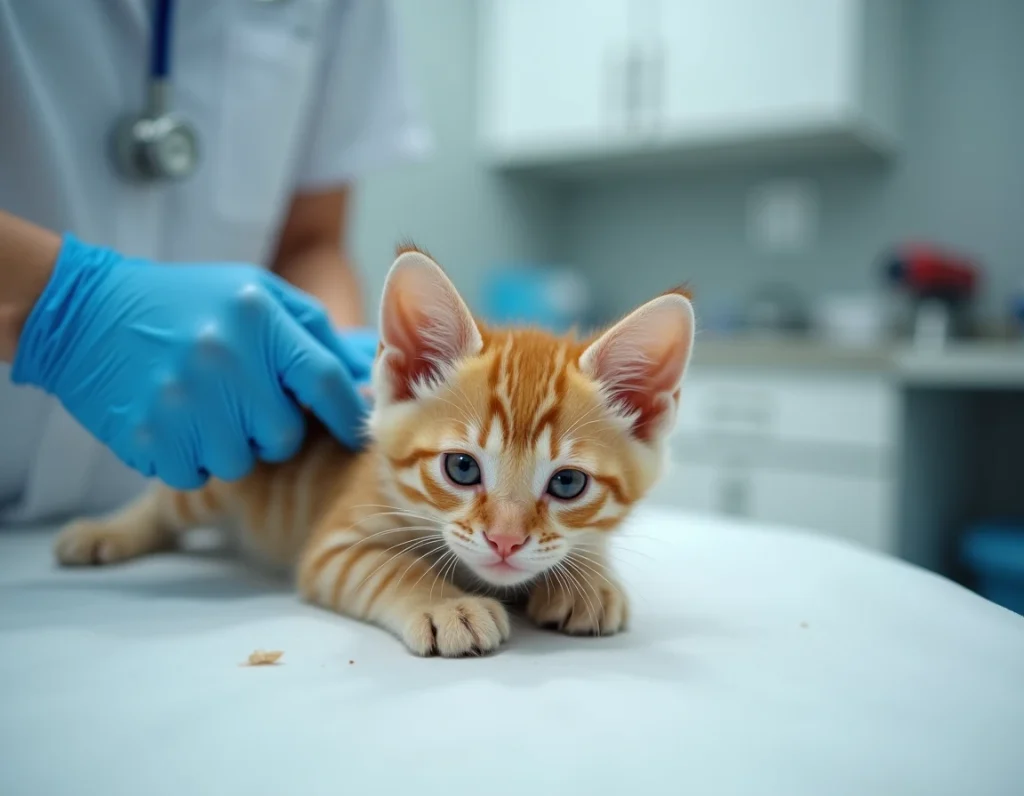
In male kittens, the testicles form in the abdomen, near the kidneys, during embryonic life. Their migration to the scrotum follows a precise path, guided by a fibrous structure called the gubernaculum testis. This descent of the testicles determines the future fertility of the cat and sets the timeline for castration.
Gubernaculum testis and testicular migration: the mechanism at play
During embryonic development, each testicle is connected to the scrotum by the gubernaculum testis, a band of fibrous tissue that gradually retracts. This retraction pulls the testicle from its initial abdominal position, makes it traverse the inguinal canal, and then guides it into the scrotal pouch.
Two factors are involved in this process. The first is mechanical: the tension exerted by the gubernaculum. The second is hormonal: signals produced by the testicle itself promote the regression of the suspensory ligament that keeps it in a high position.
A detailed article discusses the descent of the testicles in kittens on AlmAnimal, specifying the stages of this migration and the situations in which it may fail.
When everything goes normally, the testicles are palpable in the scrotum within the first few weeks of life. The veterinarian checks for their presence during the first vaccination consultation, usually around eight weeks.

Observation window before diagnosing cryptorchidism
Noticing that a testicle is not in place at eight weeks is not sufficient for a definitive diagnosis. The descent may still occur in the following weeks, although the probability decreases over time.
Beyond six to seven months, spontaneous descent becomes negligible. This chronological marker serves as a threshold for veterinarians to confirm cryptorchidism and consider surgical intervention.
Before this age, regular palpation of the scrotum during follow-up visits allows for monitoring progress. In some kittens, a testicle may be palpable in the inguinal region without having yet reached the scrotum. This intermediate position warrants close monitoring, as it may evolve favorably or remain static.
Cryptorchidism in cats: location of the testicle and care pathway
Cryptorchidism refers to the absence of one or both testicles in the scrotum. It differs from monorchidism, which corresponds to the congenital absence of one testicle’s development. In practice, unilateral cryptorchidism (one testicle retained) is the most common form.
Inguinal or abdominal testicle: two distinct situations
The diagnostic and surgical approach differs depending on where the testicle has become trapped:
- Inguinal position: the testicle is stuck in the inguinal canal or just under the skin of the groin. It is often palpable during clinical examination. The surgical intervention is performed through an inguinal approach, which is less invasive.
- Abdominal position: the testicle has never crossed the inguinal canal and remains in the abdominal cavity. Palpation does not allow for localization. An abdominal ultrasound is then necessary to confirm its presence and position before scheduling a laparotomy.
- Intermediate positions: in some cases, the testicle is at the entrance of the inguinal canal, making palpation ambiguous. Imaging clarifies the doubt.
This distinction significantly alters the care pathway. A palpable inguinal testicle leads to quick and uncomplicated surgery. A non-palpable abdominal testicle requires an additional imaging step and a more extensive intervention.
Why remove an undescended testicle
A testicle remaining in the abdomen is exposed to a higher body temperature than that of the scrotum. This thermal difference disrupts spermatogenesis and increases the risk of testicular tumors in the medium or long term. There is also a risk of testicular torsion.
Castration of the cryptorchid testicle is recommended regardless of its location. In a unilateral cryptorchid cat, the descended testicle remains functional: the cat retains sexual behavior and can reproduce, which also justifies the removal of both testicles to prevent the transmission of the hereditary trait.
Castration of the kitten and early sterilization in shelters
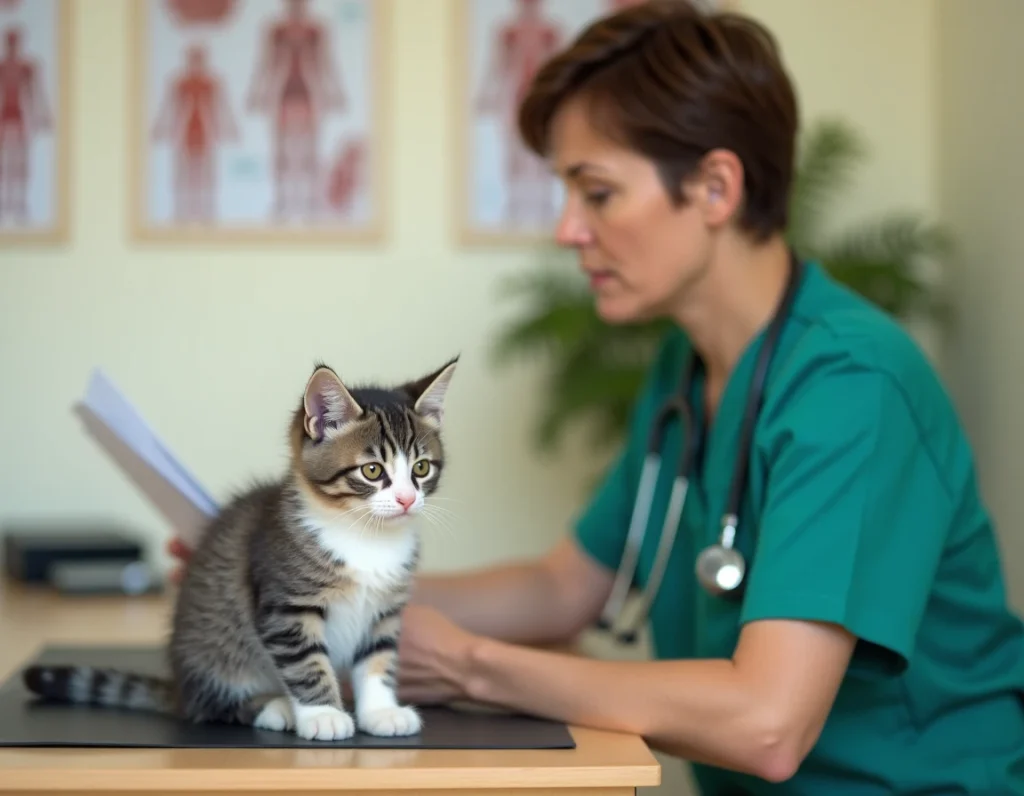
Classic castration is generally scheduled between five and six months in France, once testicular descent has been verified. In a kitten with both testicles in place, the procedure is quick, and recovery lasts about ten days.
In shelters and animal protection associations, early sterilization between eight and twelve weeks has become common, sometimes even before adoption. This practice means that the diagnosis of cryptorchidism can be made very early in a collective context, with appropriate care starting from a young age.
For a cryptorchid kitten, the veterinarian adjusts the schedule. If the testicle is in the inguinal position, castration can be performed at the same time as the removal of the scrotal testicle. If the testicle is abdominal, the intervention requires specific planning with prior ultrasound.
Palpation and veterinary follow-up of the male kitten
Checking for testicular descent does not require complex examination. During each vaccination visit, the veterinarian palpates the scrotal area and the inguinal region. This check takes a few seconds and provides crucial information for the future.
Three chronological markers structure the follow-up:
- First consultation (around eight weeks): initial check of the presence of the testicles in the scrotum.
- Vaccination follow-up consultation (around twelve weeks): new palpation, comparison with the previous examination.
- Pre-castration consultation (around five to six months): definitive confirmation. If a testicle is missing at this age, the diagnosis of cryptorchidism is almost certain, and discussion about intervention begins.
The hereditary nature of cryptorchidism justifies not breeding an affected cat, even if only one testicle is involved. Conscientious breeders systematically exclude breeders carrying this anomaly to limit its transmission in the lines.
The descent of the testicles in kittens follows a relatively predictable timeline, and it is precisely this regularity that makes screening simple. A palpation at each veterinary visit is sufficient to detect an anomaly before it poses a health problem.