On June 10, 2018, Google replaced its logo with a catapult mini-game featuring colorful garden gnomes. This interactive Doodle, titled Celebrating Garden Gnomes, celebrates the Tag des Gartens, Garden Day in Germany. Among the dozens of playable Doodles released by Google over the years, this one frequently comes up in online conversations, often cited as one of the most entertaining.
Catapult Mechanics of the Garden Gnomes Doodle: Why Timing Changes Everything
Most of Google’s interactive Doodles rely on quick reflexes or puzzle-solving. The garden gnome game works differently: the mechanics depend on precise two-step timing.
The player first triggers the catapult’s movement, then chooses the exact moment to release the gnome. The distance traveled depends entirely on this timing. Missing the right moment by a fraction of a second sends the character barely farther than the starting point.
This double-timing system creates a unique enjoyment, akin to physical skill games. It’s not about clicking frantically or memorizing a sequence. Each throw requires a micro-decision, and it’s this brief but repeated concentration that makes the rounds addictive. Anyone who has tried the Google garden gnome game quickly realizes that the apparent simplicity hides a real progression curve.
Choosing the Garden Gnome and Trajectory: Experimentation as the Engine of the Game
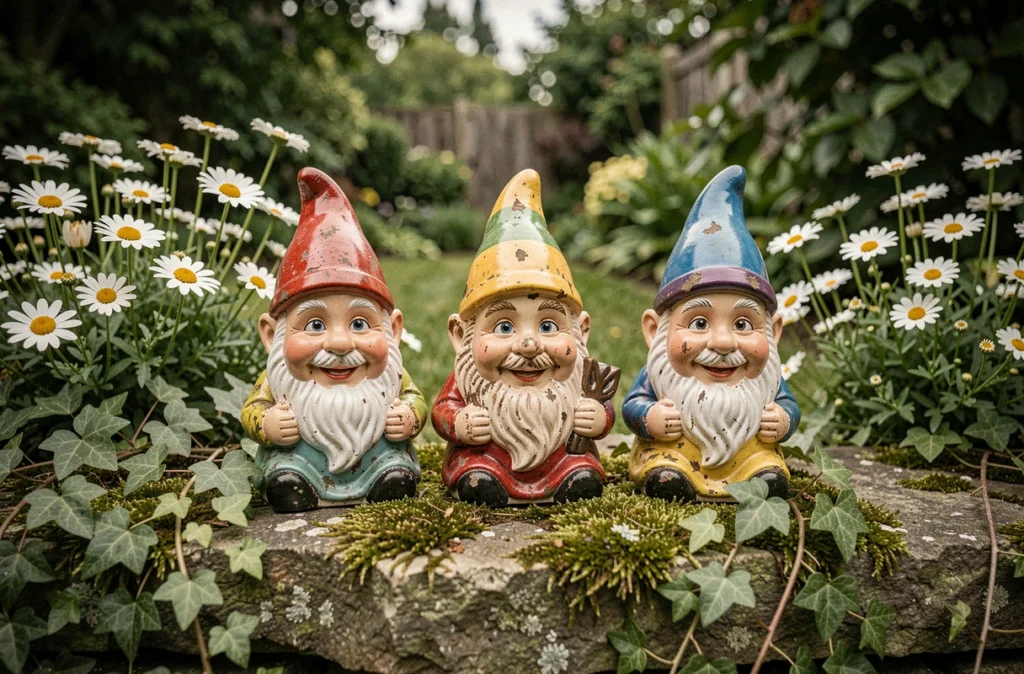
A detail that high-score guides mention little: the choice of character alters the trajectory and distance. Each gnome has distinct visual characteristics, but the differences go beyond aesthetics.
Some gnomes seem heavier, while others glide more after being launched. Testing each character to understand its behavior in flight is an integral part of the game. It’s not just a graphical skin: players who switch between gnomes discover surprising results from one round to the next.
This experimental dimension sets Garden Gnomes apart from most Google Doodles. In Coding for Carrots (2017), for example, progression is linear: each level has a unique solution. In the cricket game (ICC Champions Trophy 2017), gameplay boils down to clicking at the right moment. The gnome Doodle offers more variables to manipulate, giving it longer replayability.
Three Elements That Extend the Interest of the Rounds
- The variety of gnomes encourages players to replay to compare each character’s performance, not just to beat a record
- The absence of a detailed tutorial pushes players to discover how the catapult works on their own, reinforcing the sense of gradual mastery
- The ultra-short format of a round (a few seconds) eliminates any friction: restarting requires zero effort, which promotes the gameplay loop
Interactive Google Doodle: What Makes a Mini-Game Truly Fun
Comparing Doodles solely based on score or popularity misses the point. A fun game is not necessarily the one that generates the highest scores, but the one that makes you want to restart a round for no specific reason.
The Pac-Man Doodle remains a classic, but it replicates an existing game. The Halloween 2016 game, featuring a wizard cat, combines storytelling and gameplay, but the duration of the rounds makes it less suitable for a quick session between tasks.
Garden Gnomes occupies a unique position in this landscape. It combines three qualities rarely found together in a Doodle:
- An immediate grasp (one click, two steps) that requires no explanation
- A hidden depth related to character choice and timing refinement
- A quirky visual tone – gnomes launched by catapult in a flower-filled garden – that brings a smile from the very first second
The contrast between the absurdity of the concept and the precision required is likely the key to its success. The player laughs at the sight of a gnome flying through the garden, then focuses to gain a few extra meters on the next throw.

Cultural Origin of the Garden Gnome Doodle: The German Tag des Gartens
Google did not choose garden gnomes by chance. The Doodle was published on June 10, 2018, to celebrate the Tag des Gartens, a day dedicated to gardening culture in Germany. Gartenzwerge (garden gnomes) have held a special place in popular imagination since the 19th century.
This cultural context gives the game a dimension that other Doodles lack. The Scoville Doodle (2016), dedicated to peppers, celebrated an American pharmacist. Garden Gnomes, on the other hand, is rooted in a popular gardening tradition, which explains its resonance with a broad audience, far beyond video game enthusiasts.
The available data do not allow us to conclude that this Doodle is objectively “the most fun” of all. Fun remains subjective, and Google has never published an official ranking based on average playtime or the number of rounds per user. What can be said is that Garden Gnomes brings together game design ingredients rarely combined in a Doodle: accessibility, subtle depth, visual humor, and immediate replayability.
The best test remains to start a round, choose a gnome at random, and see if you stop after just one throw. The answer, in the vast majority of cases, is no.