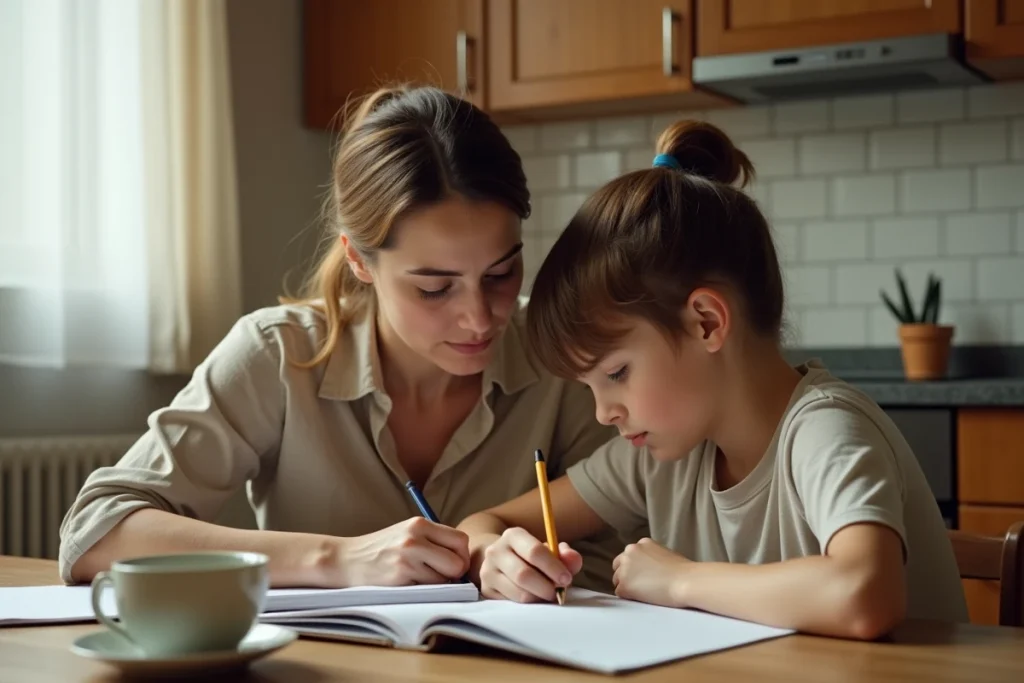
A child growing up with their mother as the only parent at home does not have the same experience depending on whether this situation results from a contentious separation, a bereavement, or a deliberate choice. This distinction, often absent from discussions about single-parent families, nonetheless alters the understanding of the psychological effects on the child. Understanding the impact of being raised by a single mother requires going beyond shortcuts and looking at what recent research documents.
Chosen or imposed single parenthood: a determining factor for the child’s psychological health
Most articles on the subject treat single mothers as a homogeneous group. However, the work of Golombok et al. (2016), synthesized by Conceivio, shows that children of single mothers by choice exhibit emotional well-being comparable to that of children from two-parent families. Social adaptation, academic success, emotional stability: the indicators are similar as long as the mother has material security and a supportive environment.
This finding changes the lens through which we view the situation. The psychological risk for the child does not stem from the mere absence of a father, but from the context surrounding that absence. A contentious separation, prior domestic violence, or sudden financial insecurity are far more predictive stress factors than the family structure itself.
To delve deeper into the causes and consequences of single mothers on Claravox, this distinction between chosen and imposed paths sheds light on many preconceived notions.
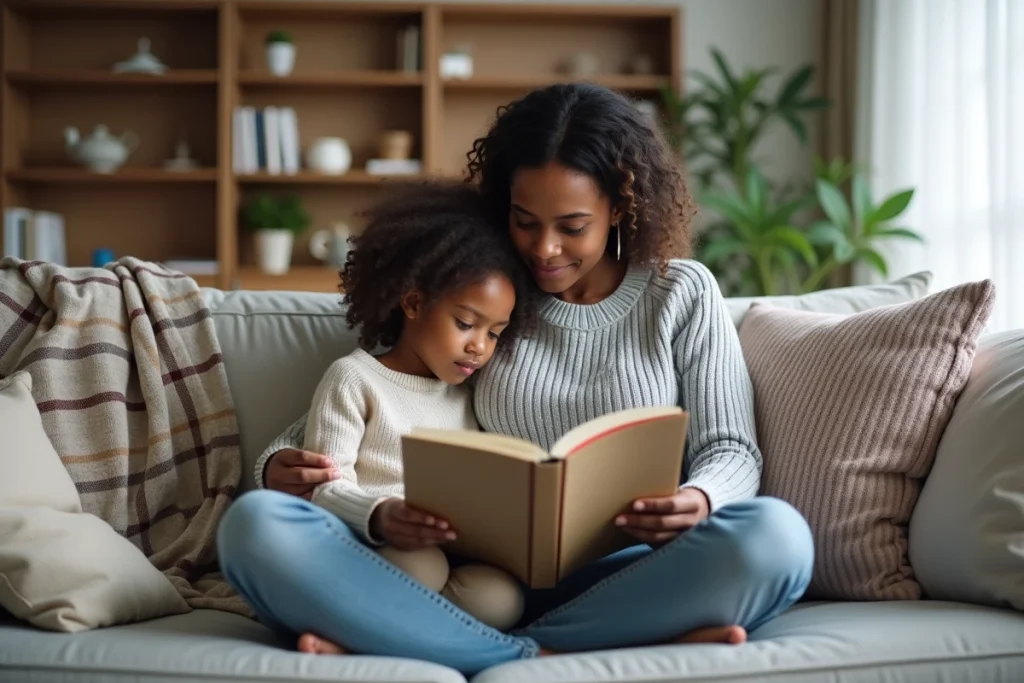
Parental stress and mental load: what the child perceives daily
A single parent juggles educational decisions, household management, and often a full-time job. This accumulation generates what specialists call the mental load of the solo parent. The child, even at a young age, perceives this tension.
Have you ever noticed that a child changes behavior when the atmosphere at home becomes tense? They do not always understand the cause, but they react. Irritability, withdrawal, sleep difficulties: these signals reflect a form of adaptation to a stressful environment.
The concrete mechanisms of stress transmission
Parental stress is not transmitted through words. It comes through daily micro-signals:
- A tired mother responds more curtly to requests, which may lead the child to reduce their emotional demands in anticipation of rejection.
- Unstable routines (meal times, bedtimes) weaken the sense of security, especially in preschool-aged children.
- The absence of adult support at home pushes some children to adopt an emotional support role towards their mother, a phenomenon called parentification.
Parentification refers to this role reversal where the child becomes the confidant or emotional pillar of the parent. This is not a conscious choice by the mother. It is a gradual shift, exacerbated by isolation.
Father absence and the child’s identity construction
The question of the father figure consistently arises in discussions about single-parent families. For both sons and daughters, the daily absence of a father raises different issues depending on age.
For young children, the main issue is not the gender of the present parent but the diversity of available attachment models. An uncle, a grandfather, a family friend, or a teacher can fulfill a male role model function without replacing a father. What weakens the child is the complete absence of varied adult figures around them.
Adolescence and the search for role models
During adolescence, the situation becomes more complicated. The son of a single mother may feel a stronger need to confront a male authority. Without this confrontation, some adolescents seek models outside the home, sometimes in loosely structured peer groups.
For girls, the exclusive mother-daughter relationship can become very enmeshed. The psychological separation during adolescence then proves more difficult, as the daughter fears hurting a mother she perceives as vulnerable. This barrier to autonomy remains a point of concern that few public resources address.

Resilience and protective factors in single-parent families
A child raised by a single mother does not automatically develop psychological difficulties. Several protective factors can tilt the trajectory one way or the other.
- An active support network (extended family, friends, neighbors) reduces the mother’s isolation and offers the child diverse social interactions.
- Financial stability, even modest, decreases chronic stress at home. Recent aids targeting isolated mothers in France contribute to this stabilization.
- The mother’s ability to discuss the family situation in an age-appropriate manner protects against unspoken issues and anxiety-inducing fantasies.
- Occasional psychological support during transitions (starting school, moving, adolescence) can help defuse tensions before they crystallize.
Research on single mothers by choice confirms this point: when the mother has prepared her situation, built a network, and maintained an active social life, children fare as well as in other family configurations.
The psychological impact of being raised by a single mother depends less on family structure than on the quality of the emotional and material environment. Recognizing signs of parentification, maintaining varied adult figures around the child, and not hesitating to seek professional support during pivotal periods remain the most concrete levers to preserve the child’s psychological health.