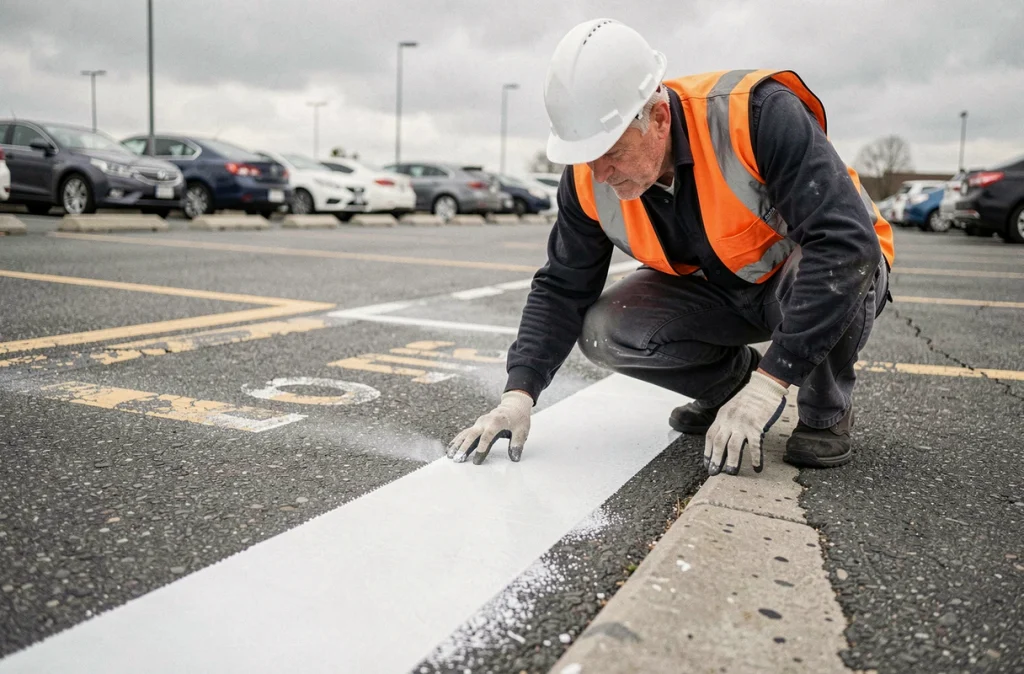
The durability of a parking lot marking does not solely depend on the chemical family of the applied product. It results from a complete system: substrate preparation, formulation choice, application conditions, and maintenance protocol. Neglecting any one of these parameters drastically reduces the longevity of the marking, regardless of the budget invested in the paint itself.
Maintaining NF EN 1436 normative performance in operation
The NF EN 1436 standard sets measurable thresholds for retroreflection, luminance under diffuse lighting, adhesion, and chromaticity for markings in service. We observe that most specifications limit themselves to requiring a lifespan in years, without mentioning the maintenance of normative values throughout the entire operational period.
Nocturnal retroreflection, expressed in mcd/m²/lx, rapidly decreases in a high-traffic parking lot if the glass bead system was not correctly sized during application. A compliant paint can fall below regulatory thresholds within a few months. Planning checks with a retroreflectometer allows for proactive measures before the signage becomes non-compliant.
Choosing a paint for parking lot marking solely based on the price per liter ignores this technical reality. The overall cost includes the frequency of compliance restoration, directly linked to the product’s ability to maintain its optical properties under stress.
Toluene-free formulations and application conditions in parking lots
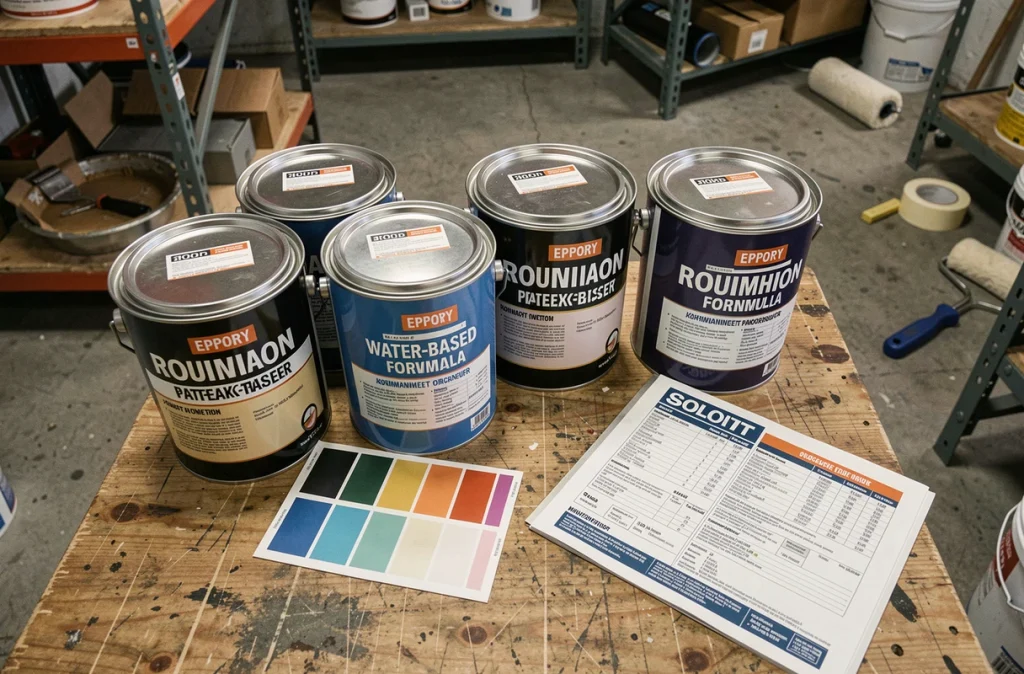
Solvent-based paints remain effective on bituminous substrates, but their composition has evolved. Since 2024, several manufacturers offer toluene-free formulations that reduce toxicity for applicators while maintaining compliance with horizontal signage standards.
This criterion goes beyond mere environmental preference. In a covered or semi-covered parking lot, the lack of natural ventilation makes exposure to solvents particularly problematic. A toluene-free paint allows for intervention in these configurations without heavy air extraction systems, reducing the logistical cost of the project.
We recommend systematically checking the safety data sheet (SDS) of the selected product. The mention “toluene-free” on the commercial label does not guarantee the absence of other aromatic solvents. The SDS remains the only reliable document to assess the actual toxicological profile of the formulation.
Interaction between parking cleaning and marking degradation
A rarely addressed point in selection guides: the parking cleaning protocol degrades marking paints. Industrial scrubbers, pressure washers, and certain alkaline detergents attack the paint film much faster than just the passage of vehicles.
In a shopping center parking lot cleaned daily, a water-based acrylic paint can lose its legibility two to three times faster than in a parking lot with the same traffic cleaned weekly. The mechanical abrasion from rotary brushes combined with the chemical action of detergents creates a degradation synergy that traffic alone would not produce.
Adapting product choice to the cleaning regime
Before selecting a paint, we advise gathering the following information from the site manager:
- Frequency and method of cleaning (sweeper, scrubber, high pressure)
- Nature of the detergents used and their pH
- Intensive cleaning areas (entrances, ramps, pedestrian zones) compared to less solicited areas
- Presence of oil or fuel spills requiring specific degreasers
This data guides the choice towards an epoxy or polyurethane resin in intensive cleaning areas and allows reserving water-based acrylics for less constrained zones. Segmenting products by constraint area reduces overall costs without sacrificing the durability of the marking where it is most needed.
Substrate preparation and adhesion on aged asphalt
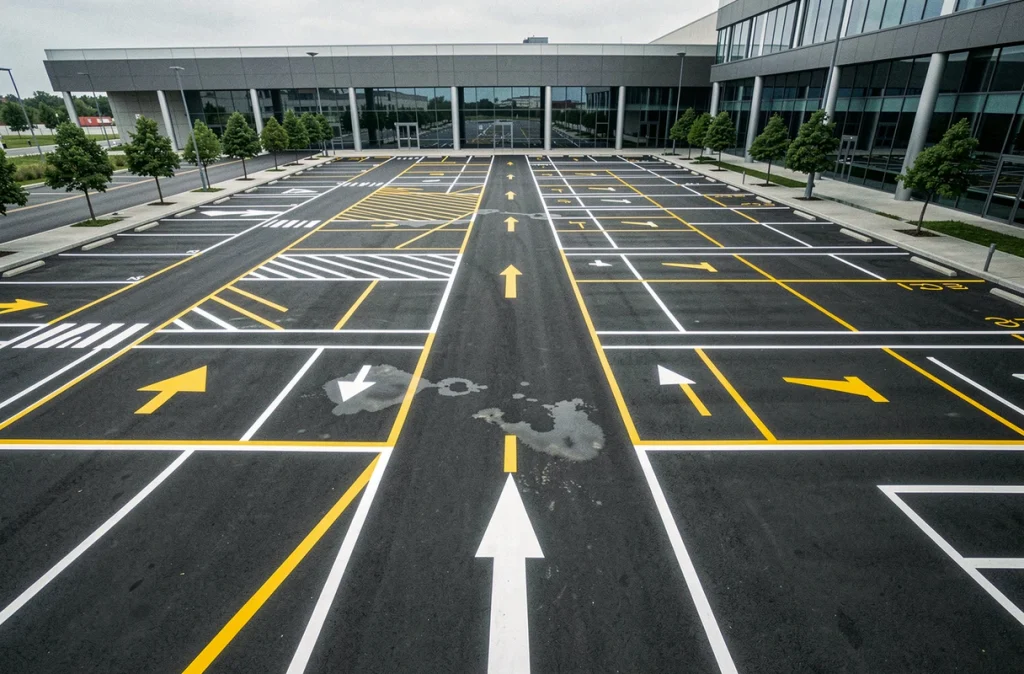
A new asphalt and a ten-year-old asphalt do not have the same surface porosity. On an old substrate, the rise of bituminous binder (bleeding phenomenon) creates a greasy film that prevents the mechanical adhesion of the paint. Applying a high-performance product on a poorly prepared substrate is a waste of budget.
Sandblasting or mechanical sweeping followed by targeted degreasing are the two effective methods to restore sufficient roughness. The pull-off test by grid (ISO 2409 standard) conducted on a test area before the complete project provides an objective measure of the adhesion achieved.
Temperature and humidity at the time of application
Water-based paints should not be applied below a temperature threshold (generally a few degrees above zero) or on a substrate whose temperature is below the dew point. In an outdoor parking lot, the viable application window significantly narrows in autumn and winter.
Solvent-based paints tolerate wider temperature ranges, which may justify their choice for projects scheduled during cold periods. This calendar constraint, often overlooked in tenders, directly impacts the final quality of the marking.
NF certification and traceability of road marking products
Paints certified NF by Ascquer meet a performance reference verified by a third-party organization. This certification covers wear resistance, color retention, and initial retroreflection. Requiring an NF-certified product in the specifications is the simplest way to filter out underperforming formulations.
The traceability of the paint batch used on site allows, in case of premature failure, to trace back to the manufacturer and invoke the product warranty. We recommend requiring the contractor to keep batch references and associated technical data sheets.
- Check for the NF certification mention on the bucket or product sheet
- Request the technical sheet indicating measured performances (retroreflection, adhesion)
- Keep batch references for each treated area
Durable ground marking relies on a technical balance between formulation, substrate, and operational constraints. A product suited to the cleaning regime and applied on a properly prepared substrate will consistently outperform a premium paint applied under poor conditions. NF certification and monitoring of normative performance in service remain the two most reliable safeguards for a parking manager.