The maintenance log filled out halfway, reminders from service providers dragging on, a general assembly minutes voted but never executed: most dysfunctions in co-ownership do not stem from a lack of rules, but from a lack of traceability in the execution chain. Here we discuss the operational levers that transform a voted decision into a task actually accomplished.
Traceability of Responsibilities: The Weak Link in Co-Ownership Management
A resolution adopted in a general assembly has no effect as long as no one has formalized who is in charge, who controls, and who validates. We regularly observe co-ownerships where the property manager issues a call for tenders, but where no member of the board follows up on the completion of the work. The service provider invoices, the property manager pays, and non-compliance is only noticed months later.
The solution lies in a written responsibility matrix for each contract or project. It designates four roles: the decision-maker (general assembly or board depending on the amount), the operational leader (professional or volunteer property manager), the technical controller (referent co-owner or project manager), and the invoice validator. This division is not bureaucratic. It avoids situations where everyone thinks the other has checked.
Find co-ownership advice on Spy Immo to delve deeper into the distribution of tasks between the property manager and the board.
Formalizing this chain in the minutes themselves, as an annex to each resolution for work, allows for unambiguous reference. When a co-owner disputes an invoice or a delay, the matrix immediately clarifies the question of responsibility.

Maintenance Log and Contract Monitoring: Going Beyond Regulatory Obligation
The building’s maintenance log is a legal obligation of the property manager. In practice, it often boils down to a static list of past dates and interventions. For it to become a true management tool, it must integrate three additional dimensions.
- A rolling forecast schedule: each maintenance contract (elevator, boiler room, facade renovation) is associated with its renewal date, termination notice, and the projected budget included in the multi-year work plan.
- An history of non-compliance: if a service provider delivered late or if an intervention required a redo, this information is included in the log. It weighs in during contract renewal.
- A technical section accessible to co-owners: building plans, regulatory diagnostics (asbestos, lead, collective energy performance), equipment manuals. Transmitting this information during a sale avoids post-acquisition disputes.
This enriched log also serves as a support during general assemblies. Rather than voting on a maintenance budget based on an estimate from the property manager, co-owners have a factual history of expenses and interventions carried out.
Online Tools for Ongoing Monitoring
Online management platforms now allow for centralizing the maintenance log, calls for funds, and exchanges with the property manager. The main interest is not the dematerialization itself, but the real-time visibility on the progress of tasks. A co-owner can check if the voted estimate has been signed, if the contractor has been followed up with, and if the invoice has been paid.
We recommend prioritizing a tool that generates automatic notifications for each status change. The board thus receives an alert when a contract is about to expire or when a payment exceeds the voted amount, without having to query the property manager.
Energy Renovation in Co-Ownership: Structuring the Project as a Recurring Task
Energy renovation is no longer limited to a one-time vote on insulation work. It involves continuous management: initial diagnosis, multi-year plan, search for funding, consultation of companies, project monitoring, verification of performance after work. Each step requires an identified responsible party and a maintained schedule.
A common mistake is to vote for an energy audit in the general assembly without having defined who will exploit its conclusions. The report remains in a drawer, the projected budget is not recorded, and the project takes several years to complete.
The Role of ADIL in Supporting Co-Owners
ADIL (Departmental Agencies for Housing Information) offer free legal and financial support. They intervene on issues of charges, work, property manager operations, and preparation of general assemblies. Having a renovation project or financial arrangement verified before the vote in assembly reduces procedural errors and subsequent disputes, as highlighted by ANIL.
This neutral support usefully complements the work of the property manager, whether professional or volunteer. It is particularly relevant for medium-sized co-ownerships that cannot afford to hire a dedicated project management assistant.
General Assembly: Turning Votes into Action Plans
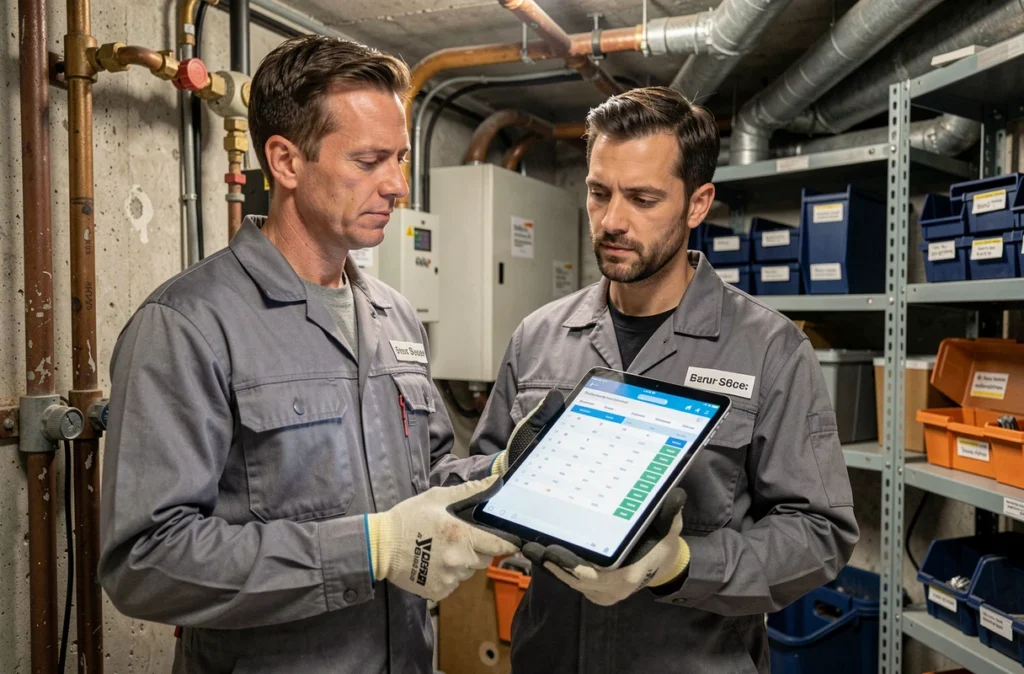
The minutes of the general assembly are a legal document. In their current state, they are not a management tool. To ensure the execution of resolutions, we recommend producing a post-assembly follow-up table separate from the minutes, distributed in the weeks following the vote.
This table lists each adopted resolution and associates it with a responsible party, a deadline, and a progress indicator. The board updates it during its meetings and shares it with all co-owners via the online space of the co-ownership.
The mechanism is simple, but it radically changes the execution rate. Without this follow-up, a resolution voted in June may only be initiated in the following January, simply because no one has followed up with the property manager in the meantime. The post-assembly follow-up is the only mechanism that connects collective decision-making to concrete action.
The rigor of the follow-up matters more than the sophistication of the tools. A shared spreadsheet, updated each month by a board member, is enough to maintain operational pressure on each voted task. What distinguishes a well-managed co-ownership from a struggling one is neither the budget amount nor the size of the building, but the ability to close the loop between voting and delivery.