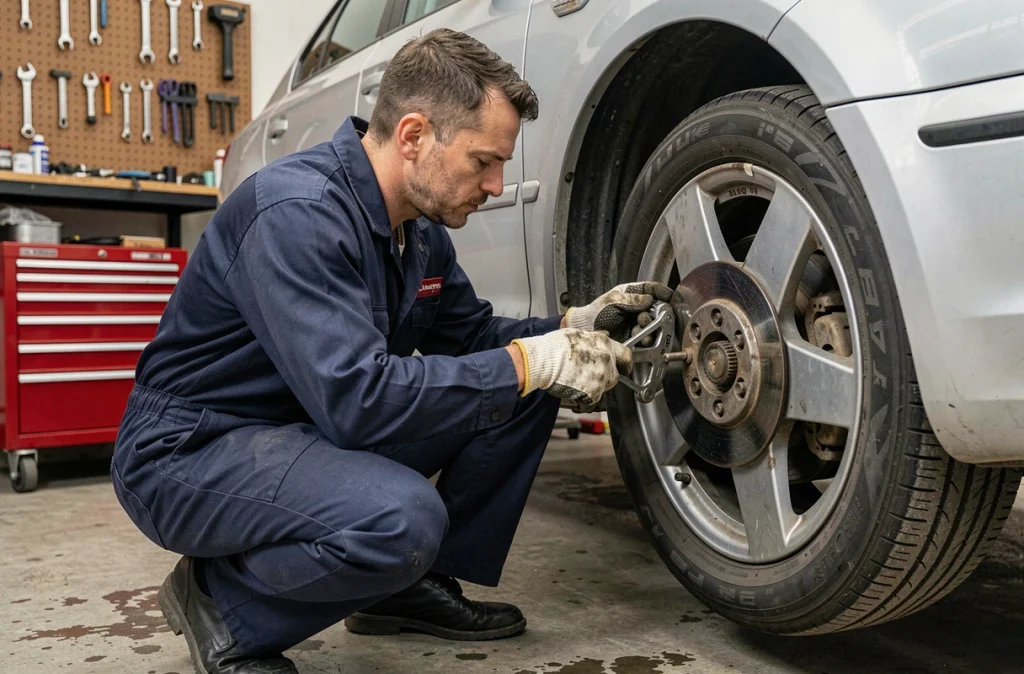
A leaking brake line, a dead battery on a Monday morning, brake pads that have been squeaking for three weeks: most common breakdowns announce themselves well before they leave the car stranded on the roadside. Maintaining and repairing your car without always going to a workshop requires early detection of these signals, having the right tools on hand, and knowing the few actions that make the difference between a risky DIY job and a reliable intervention.
Off-network car repair: what the warranty really allows
Regulation (EU) No. 461/2010, extended until May 31, 2028 by Regulation (EU) 2023/822, prohibits manufacturers from conditioning the commercial warranty on servicing at an authorized workshop. Off-network maintenance does not void the warranty, provided that the manufacturer’s recommendations are followed and original or equivalent quality parts are used.
In France, a decree from May 26, 2014 even mandates a clear mention in the maintenance log to inform the owner of this right. If a dealer refuses to cover a service on the grounds that the oil change was done elsewhere, that is abuse: the legal framework protects the consumer. Enthusiasts who document every intervention on passionautomeca.fr also find this logic of rigorous traceability applied daily.
Keeping invoices for parts, noting mileage, and retaining references for oils or filters used is enough to create a verifiable history. A digital maintenance log is just as good as a dealership stamp.
Engine oil change and filters: the maintenance actions that matter most
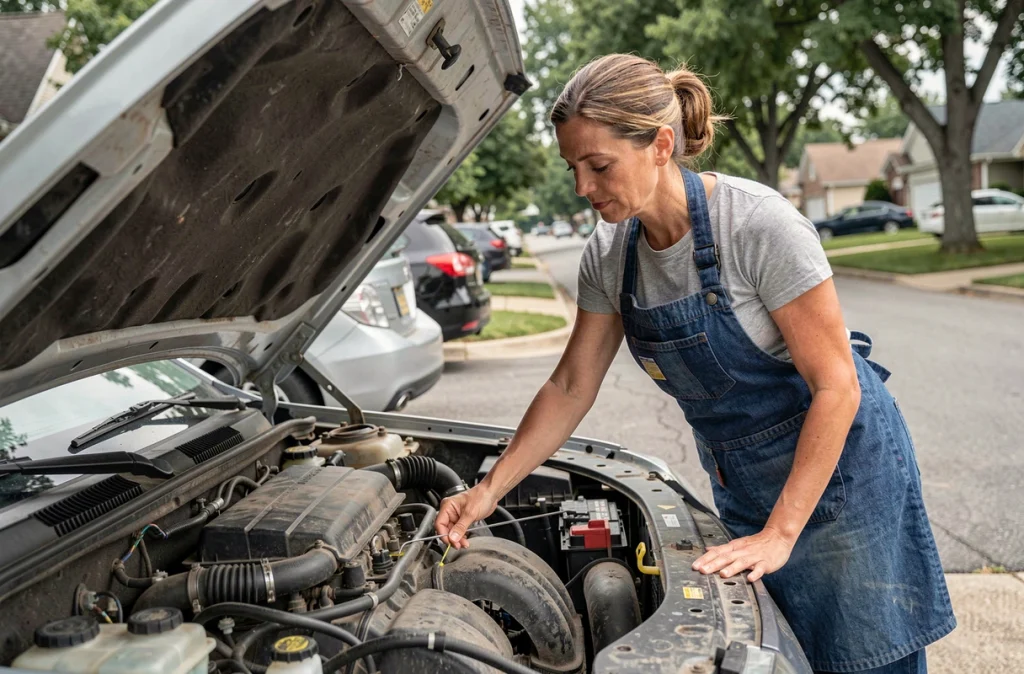
The oil change remains the most cost-effective operation to do yourself. The average cost of a workshop intervention has significantly increased in recent years. Of this amount, an oil change with filter replacement represents a significant portion, while the task takes less than an hour with basic tools.
What is often forgotten about the oil change
Changing the oil without replacing the oil filter is like brewing fresh coffee in a used filter. The oil filter should be replaced at every oil change, not every other one. The air filter should be checked every 15,000 to 20,000 km according to manufacturer recommendations, but more often if the car regularly drives on dusty roads.
The cabin filter is often overlooked. A clogged filter reduces airflow, overloads the air conditioning, and degrades the air quality inside the cabin. Its replacement rarely takes more than ten minutes and is often accessible behind the glove compartment.
- Oil filter: systematic replacement at each oil change, respecting the recommended oil viscosity (5W30, 5W40, etc.).
- Engine air filter: regular visual inspection, replacement as soon as it appears dark gray or loaded with debris.
- Cabin filter: to be changed at least once a year, twice if the car operates in a dense urban area.
- Drain plug gasket: a new copper or aluminum gasket at each oil change prevents chronic leaks.
Brakes and tires: detecting wear before failure
Squeaking brake pads are not a whim. This metallic noise comes from the wear indicator built into the pad, designed to rub against the disc when the friction material reaches its minimum thickness. A squeal when braking means that replacement is urgent, not that it can wait until the next service.
Checking the thickness of the pads only requires removing a wheel and using calipers. The measurement is compared to the vehicle specifications. Feedback varies on the exact threshold depending on the models, but going below 3 mm of lining necessitates immediate replacement.
Tire pressure and asymmetrical wear
A tire under-inflated by 0.3 bar wears out faster on the sides and increases fuel consumption. Checking the cold pressure once a month remains the simplest and most neglected safety action. Reference values are found on the label affixed to the driver’s side door frame or in the maintenance log.
Uneven wear on the tread (more pronounced on the inside or outside) indicates a geometry issue. Continuing to drive without correcting the alignment destroys the tire in a few thousand kilometers and compromises road handling.
Battery and electrical system: preventing starting failure
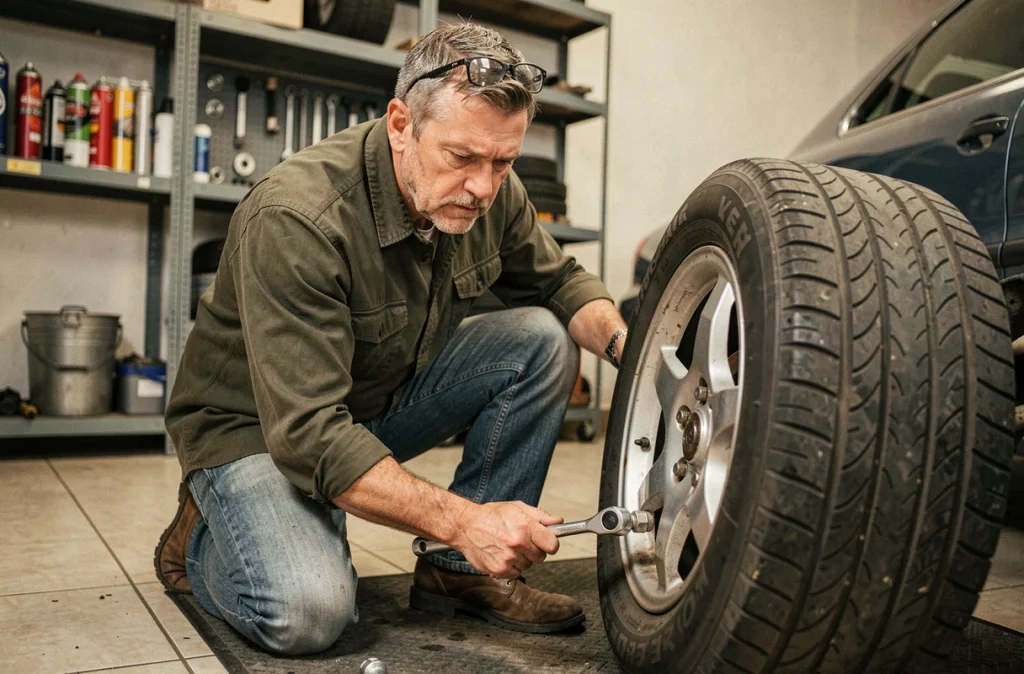
An automotive battery loses capacity well before it completely fails. The warning signs are clear: a starter that turns more slowly, dashboard lights that dim when turning the key, resetting the clock after a night of parking.
A basic multimeter is enough to measure the voltage at the terminals. A battery in good condition shows about 12.6 volts with the engine off. Below 12.2 volts, the charge is insufficient, and the battery may fail to start in cold weather.
- Clean the terminals with a wire brush and apply dielectric grease to prevent oxidation.
- Ensure that the terminal connections are tight: a poor connection causes the same symptoms as a dead battery.
- On non-sealed batteries, check the electrolyte level and top up with distilled water if necessary.
The average cost of car repairs has continued to rise in recent years, so every avoided workshop intervention represents tangible savings. Knowing how to diagnose a tired battery, replace brake pads, or adhere to a rigorous oil change schedule remains the best lever to maintain control over the budget and the vehicle’s reliability.