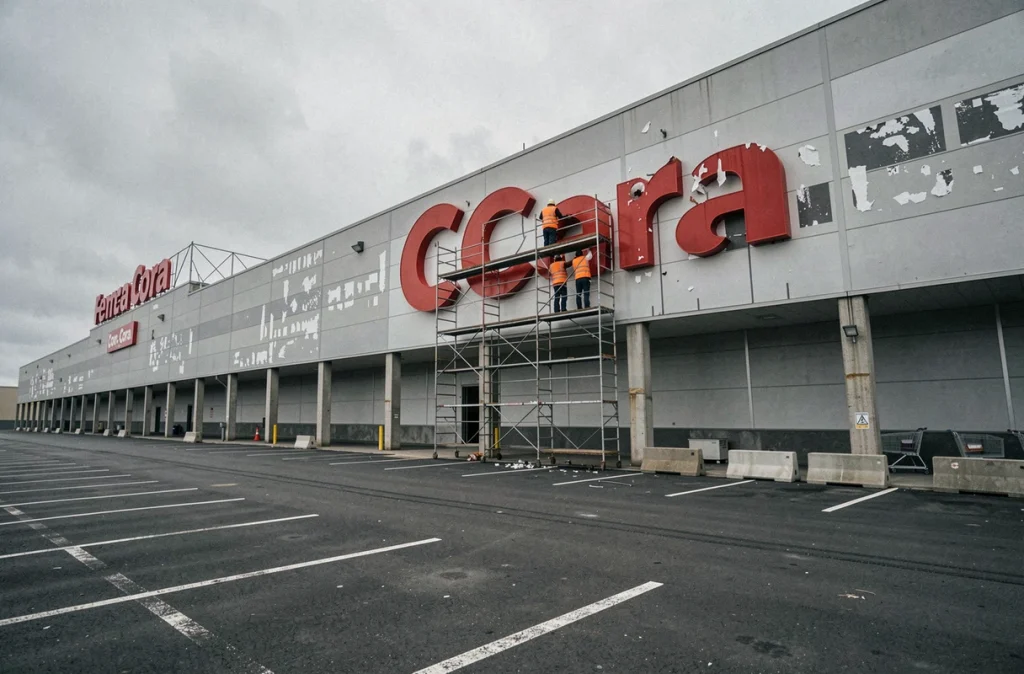
When you push open the door of an old Cora rebranded as Carrefour, the change is striking: new labels, reorganized aisles, and some usual products are nowhere to be found. The disappearance of Cora is not just a simple logo change. It reflects a profound shift in the economic model of large retail in France and Belgium, with concrete consequences for employees, suppliers, and customers.
Assortment and vanished products: what really changes in-store
The first irritation for customers of the former Cora stores is the merchandise. Carrefour applies its own assortment policy, which means that local references or niche brands that have been present for years are disappearing from the shelves. Instead, you find the Carrefour private label ranges and the group’s national agreements.
For regional suppliers who delivered to Cora, the transition has sometimes been brutal. A listing built over years of direct relationships with Cora buyers does not automatically transfer to Carrefour’s centralized system. Some local producers have lost their main outlet. You can find information on Cora Wikipedia that documents this transition and its effects on the local economic fabric.
Carrefour has acknowledged the problem and launched recovery operations to reintegrate products requested by customers. Feedback on this point varies: some stores have regained part of their historical offering, while others remain out of sync with the expectations of their catchment area.
Carrefour’s acquisition of Cora: the economic reasons for an absorption
Cora belonged to the Louis Delhaize group, a Belgian family-owned structure that also operated Match supermarkets. The Cora model relied on the independent hypermarket, with large stores managed in-house, without massive reliance on franchising.
This model has shown its limits in the face of competitive pressure. The fixed costs of a directly operated hypermarket are high: significant payroll, in-house logistics, and low purchasing mutualization compared to a giant like Carrefour or Auchan. The brand remained profitable overall, but its capacity to invest in digital, drive, and store renovations was eroding.
Carrefour saw this acquisition as an opportunity for rapid growth in France. Instead of opening new hypermarkets (an exercise that has become nearly impossible due to regulatory restrictions on commercial surfaces), the group absorbed an existing network of around sixty stores, plus the Match supermarkets.
The bet on economies of scale
The logic is classic in large retail:
- Centralize purchases to obtain better supplier prices and increase back margins
- Deploy Carrefour private labels across an expanded network, improving the margin rate per item
- Mutualize logistics, information systems, and support teams between the former Cora and the existing network
The former Cora and Match stores are driving Carrefour’s growth in France, with comparable sales growth rising from about 2.6% in the first quarter of 2026 to 4.6% in the second quarter. However, these stores remain generally unprofitable due to integration costs.
Social impact of Cora’s disappearance in Belgium
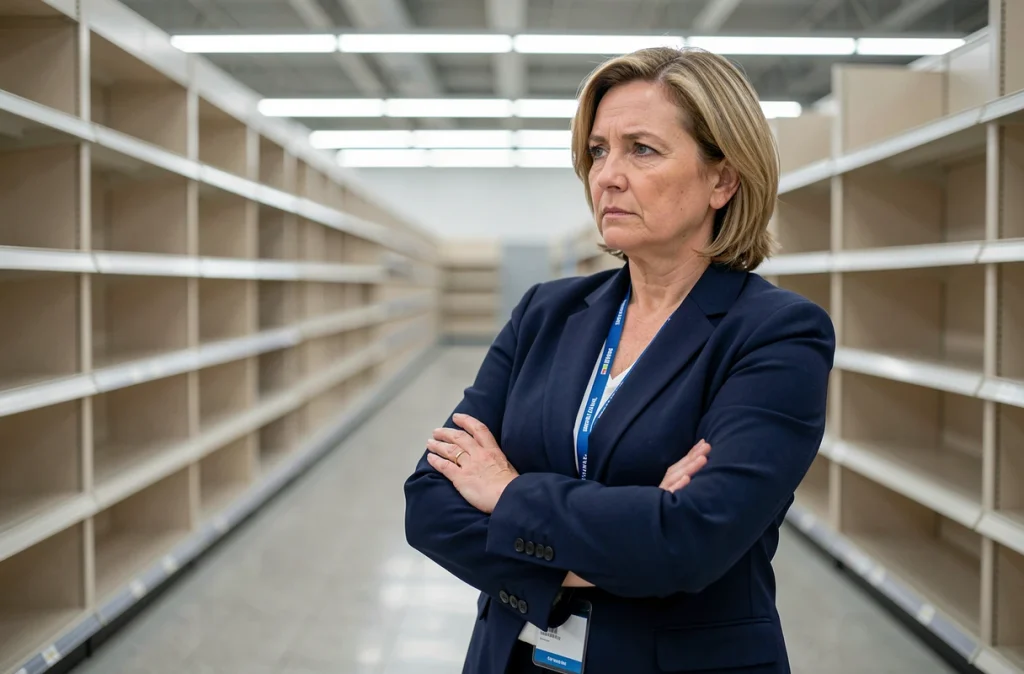
In Belgium, the situation is different and more brutal. The seven Cora hypermarkets in the country are permanently closing their doors. There is no takeover under the Carrefour brand as in France: it is a pure and simple disappearance.
The retail sector is the most affected by collective layoffs in Belgium in the first half of 2025, primarily due to the Cora case, according to a report by SD Worx published in August 2026. This is not a marginal adjustment: the closure of Cora constitutes an emblematic case of social restructuring on a national scale.
For the affected employees, the shock is twofold. The loss of jobs is accompanied by the disappearance of a historic employer to which many had been attached for decades. The social plans negotiated in this context must manage both the redeployment and the psychological support of deeply destabilized teams.
Franchising and profitability: Carrefour’s new model in Belgium
Carrefour Belgium is now betting on franchising to regain profitability. The principle: transfer part of the operational risk to franchisees, reduce direct labor costs, and focus on wholesale margins. Fewer customers in-store, but a return to profits: this is the compromise accepted by the group.
This repositioning raises a fundamental question for areas where Cora was the only hypermarket nearby. Customers must deal with a change in offerings, sometimes a change in format (transition to a smaller supermarket), or turn to competitors.

French retail: what the Cora case reveals about market consolidation
The disappearance of Cora is not an isolated case. It is part of a movement of accelerated consolidation of large retail in Europe. Mid-sized brands, caught between giants (Carrefour, Auchan, Leclerc) and discounters (Lidl, Aldi), struggle to maintain their model.
The acquisition of Cora by Carrefour is reminiscent of that of Dia or other brands absorbed in recent years. The pattern repeats:
- A family or mid-sized brand under-invests in digital and logistical transformation
- A large group acquires the store network to densify its territorial coverage
- Integration generates friction (assortment, corporate culture, transitional losses) before producing complementarities
- Consumers and employees endure the transition period without any control over the timeline
For the remaining independent brands, the signal is clear. Without critical size and without investment in digital, the pressure from large groups and discounters ultimately makes the model untenable. The question is no longer whether other brands will follow the same path as Cora, but which ones and at what pace.
The Cora case will remain in the history of large retail as a concrete example of what the race for size produces. The former stores continue their transformation under the Carrefour banner, with encouraging commercial results but a human and local balance that will take years to stabilize.