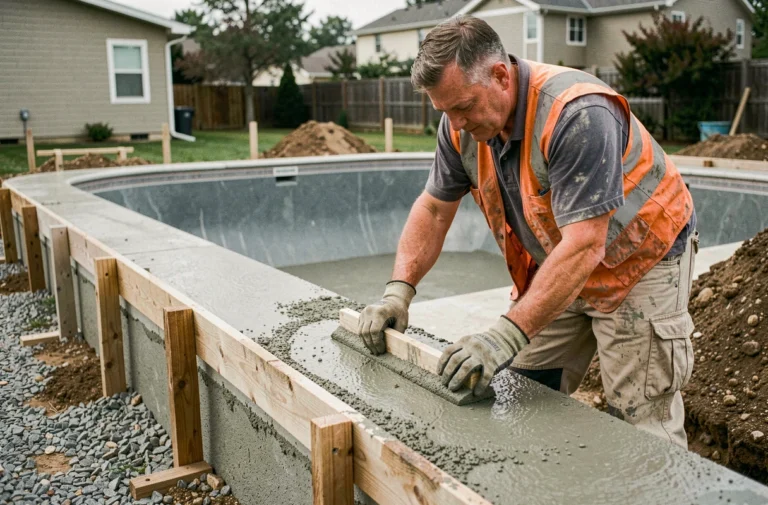
Building a house in the French-speaking part of Switzerland is not just about choosing a plot of land and signing a general contractor’s contract. Cantonal regulations, energy bonus mechanisms, and constraints outside building zones create a technical framework that conditions the feasibility of the project even before the first shovel hits the ground.
Energy Density Bonus: Gaining Legal Square Meters in French-speaking Switzerland
The Romandy cantons have introduced density bonuses that concretely modify the buildable area of a plot. This lever, ignored by most mainstream guides, can make the difference between a four-room house and a five-room one.
In the canton of Vaud, a new building certified Minergie or equivalent standard can receive a 5% bonus on the land occupation or use coefficient, at the municipality’s discretion as part of the building permit.
In Geneva, a high energy performance standard raises the land use coefficient to 27.5%, and a very high-performance standard to 30%. The canton of Fribourg grants a 10% bonus on the gross land use index for a new construction classified A under the CECB.
We recommend integrating this energy consideration from the architectural sketch stage, not at the end of the project. The additional cost associated with a high-performance envelope is partially offset by the extra square meters obtained. To support this approach early on, specialized platforms gather the necessary resources: https://www.bien-construire.ch/ notably centralizes the relevant sectors and contacts in French-speaking Switzerland.
The Geneva energy regulation, which came into effect on November 1, 2025, has strengthened these requirements. Anticipating the target standard allows for proper sizing of insulation, ventilation, and heating production systems without costly adjustments during construction.
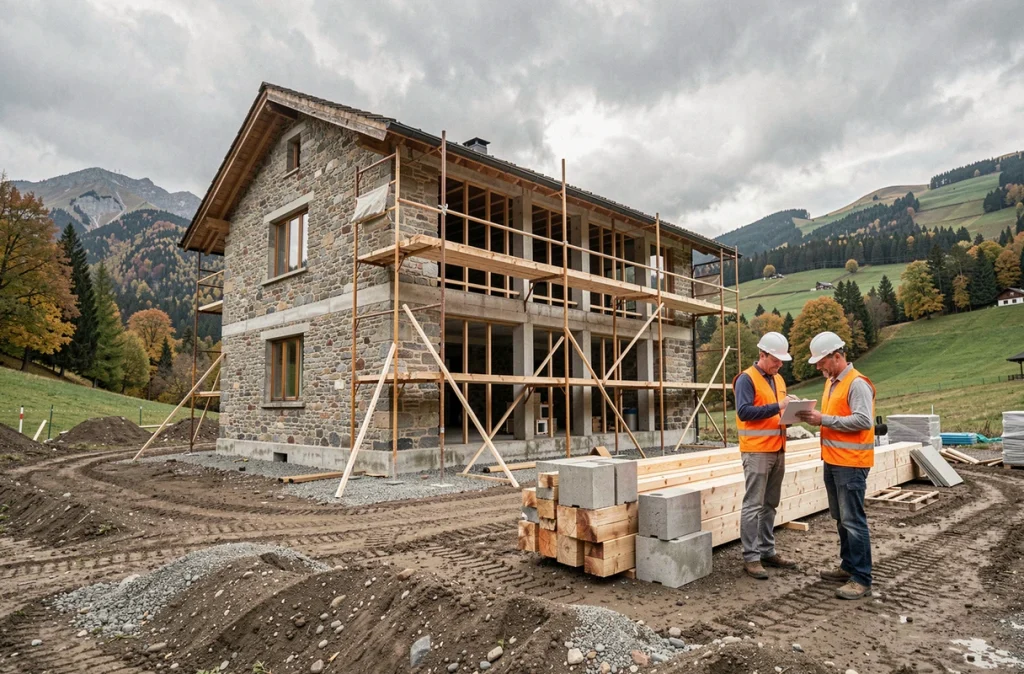
Building Outside Building Zones: What the LAT Really Allows
The federal law on land use strictly regulates any construction outside building zones. The revision of the LAT has tightened the conditions for non-agricultural constructions. Only transformations of existing buildings, under specific conditions, remain feasible in most cases.
In practice, a transformation is allowed if the building is protected as a heritage site or if it was legally erected. The enlargement cannot exceed a limited percentage of the existing main usable area. Changing the use to residential requires that the building is no longer necessary for its original agricultural use.
- Check the status of the plot in the land registry and the municipal zoning plan before any purchase promise
- Consult the cantonal construction service to confirm the feasibility of a transformation
- Anticipate administrative delays significantly longer than for a construction in a building zone, with frequent opposition procedures
We observe that many buyers underestimate this regulatory lock. An attractive plot in an agricultural or intermediate zone does not guarantee the possibility of building an individual house there.
Energy Performance and IDC: Renovation Obligation in Geneva
In Geneva, the heat expenditure index (IDC) has become a binding tool. Any building exceeding an IDC threshold receives a renovation obligation within a defined timeframe. This measure also applies to recent constructions whose envelope or technical installations underperform.
For a new project, designing below the IDC threshold from delivery avoids facing a renovation obligation a few years later. The choice of heating system, type of glazing, and air tightness directly condition this index.
The CECB (Cantonal Energy Certificate for Buildings) is the reference document for assessing a property’s performance. In French-speaking Switzerland, it also serves as the basis for applications for cantonal and federal subsidies. Having a projected CECB prepared during the design phase allows for validation of technical choices before submitting the permit.
Construction Budget in French-speaking Switzerland: Underestimated Items and Concrete Trade-offs
The price of new builds in Switzerland has seen a marked increase in recent years. Individual houses have significantly risen in cost, driven by material prices, a shortage of skilled labor, and increasing energy requirements.
Three areas concentrate the most frequent budget overruns:
- Earthworks and foundations, where costs vary greatly depending on the terrain’s geology (rock, groundwater, fill)
- Technical installations (heat pumps, dual-flow ventilation, thermal solar), which represent an increasing share of the total budget
- Connections to municipal networks (water, electricity, sewage), where fees vary from one municipality to another without transparent pricing logic
Setting aside a reserve of 10 to 15% of the overall budget to absorb technical unforeseen events remains a practice we consider non-negotiable. Projects that eliminate this margin to finance additional services consistently find themselves in difficulty at the finishing stage.
Choosing the Architect and the Method of Execution
The general contractor offers a fixed price and a single point of contact but reduces customization options. The project owner who works with an independent architect and separate trades retains fine control over each item, at the cost of more demanding site management.
In French-speaking Switzerland, architect fees are generally calculated according to the SIA 102 standard. We recommend clarifying the exact scope of included services (project management or not) before signing the contract, as misunderstandings on this point generate recurring additional costs.
The success of a construction project in French-speaking Switzerland relies less on the choice of a house model than on mastering the cantonal regulatory framework and the rigor of financial structuring. Density bonuses, constraints outside building zones, and energy obligations create a technical playing field where every decision made upstream conditions the subsequent course of the project.